Thursday, June 16, 2016

Plant pathologist Wellington Muchero talks about his DOE Early Career Award.
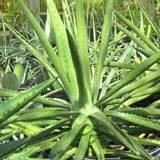
The Plant Systems Biology Group seeks to explore and understand the network of genes, proteins, metabolites, and environmental signals that lead to complex phenotypes in DOE-relevant plant species. The group applies its expertise in plant physiology, development and evolution along with application of transcriptomics, proteomics, metabolomics, molecular genetics, spectroscopy, imaging and bioinformatics approaches to studying plant models ranging from perennial dicots and monocots (Populus, willow, Eucalyptus, Agave, switchgrass, and Brachypodium), to annuals (Arabidopsis) and Sphagnum mosses. Our current research portfolio includes projects centering on topics of bioenergy research, carbon fixation, allocation and cycling, responses to climate change, plant-microbe interactions and neutron and radiochemistry-based chemical in vivo imaging. The group collaborates with several DOE-funded labs (i.e. the Joint Genome Institute, Pacific Northwest National Lab, Brookhaven National Lab and National Renewable Energy Laboratory) and multiple academic institutions.
Using willow, a widely used biofuel feedstock and pioneer species with increasing presence in the warming Arctic region, Muchero’s project will identify and characterize unique host‐derived genetic factors that allow select microbes to successfully evade plants’ defense mechanisms. The research presents a unique opportunity to couple new growth‐promoting microbes with willow to increase carbon sequestration in the vulnerable Arctic and improve plant biomass yields for the sustainable production of cellulosic biofuels.

Down-regulation of a KORRIGAN-like endo-β-1,4-glucanase gene impacts carbon partitioning, mycorrhizal colonization and biomass production in Populus. 2016. Kalluri UC, Payyavula R, Labbé J, Engle N, Bali G, Jawdy S, Sykes R, Ragauskas A, Tuskan G and Tschaplinski T.Frontiers in Plant Science. doi: 10.3389/fpls.2016.01455.
Characterization of cellulose structure of Populus plants modified in candidate cellulose biosynthesis genes. 2016. Bali G, Khunsupat R, Akinosho H, Payyavula RS, Samuel R, Tuskan GA, Kalluri UC, Ragauskas AJ. Biomass and Bioenergy Volume 94, November 2016, Pages 146–154 doi:10.1016/j.biombioe.2016.08.013
Plant-Derived Terpenes: A Feedstock for Specialty Biofuels (Review). 2016. Mewalal R, Rai DK, Kainer D, Chen F, KülheimK, Peter GF, Tuskan GA. Trends Biotech. Available online 9 September 2016. doi:10.1016/j.tibtech.2016.08.003
Genome-wide analysis of lectin receptor-like kinases in Populus. 2016 Yang Y, Labbé J, Muchero W, Yang X, Jawdy SS, Kennedy M, Johnson J, Sreedasyam A, Schmutz J, Tuskan GA, Chen J-G. BMC Genomics 2016 17:699. doi:10.1186/s12864-016-3026-2
Specialized Microbiome of a Halophyte and its Role in Helping Non-Host Plants to Withstand Salinity. 2016. Yuan Z, Druzhinina IS, Labbé J, Redman R, Qin Y, Rodriguez R, Zhang C, Tuskan GA, Lin F. Scientific Reports 6, Article number: 32467. doi:10.1038/srep32467
Determining the Syringyl/Guaiacyl Lignin Ratio in the Vessel and Fiber Cell Walls of Transgenic Populus Plants. 2016. Tolbert A, Ma T, Kalluri U, Ragauskas A. Energy & Fuels Article. doi:10.1021/acs.energyfuels.6b00560.
A study of poplar organosolv lignin after melt rheology treatment as carbon fiber precursors. 2016. Sun Q, Khunsupat R, Akato K, Tao J, Labbé N, Gallego NC, Bozell JJ, Rials TG, Tuskan GA, Tschaplinski TJ, Naskar AK, Puf Y, Ragauskas AJ. Green Chem. 18:5015-5024. doi:10.1039/C6GC00977H.
Intermediate-scale community-level flux of CO2 and CH4 in a Minnesota peatland: putting the SPRUCE project in a global context. 2016. Hanson PJ, Gill AL, Xu X, et al. Biogeochemistry (Online First). doi:10.1007/s10533-016-0230-8.
The Sphagnum microbiome: new insights from an ancient plant lineage. 2016. Kostka JE, Weston DJ, Glass JB, Lilleskov EA, Shaw AJ, Turetsky MR, New Phytol. (2016). doi:10.1111/nph.13993.
Carbon Nanofiber Arrays: A Novel Tool for Microdelivery of Biomolecules to Plants. Davern SM, McKnight TE, Standaert RF, Morrell-Falvey JL, Shpak ED, Kalluri UC, et al. 2016. PLoS ONE 11(4): e0153621. doi:10.1371/journal.pone.0153621.
Natural genetic variability reduces recalcitrance in poplar. 2016. Bhagia S, Muchero W, Kumar R, Tuskan GA, Wyman CE. Biotechnology for Biofuels 9:106. doi:10.1186/s13068-016-0521-2.
A Carotenoid-Deficient Mutant in Pantoea sp. YR343, a Bacteria Isolated from the Rhizosphere of Populus deltoides, Is Defective in Root Colonization. 2016. Bible AN , Fletcher SJ , Pelletier DA , Schadt CW et al., Frontiers Microbiology 7:491. doi:org/10.3389/fmicb.2016.00491.
Orchestration of carbohydrate processing for crassulacean acid metabolism. Borland AM, Guo H-B, Yang X, Cushman JC. 2016. Current Opinion in Plant Biology 31:118–124. doi:10.1016/j.pbi.2016.04.001.
Chapter Five-The Sphagnum Genome Project: A New Model for Ecological and Evolutionary Genomics. 2016. Shaw AJ , Schmutz J , Devos N , Shu S , Carrell AA , Weston DJ. 2016. Advances in Botanical Research 78, 167-187doi:10.1016/bs.abr.2016.01.003.
Analyses of transcriptome sequences reveal multiple ancient large-scale duplication events in the ancestor of Sphagnopsida (Bryophyta). 2016. Devos N, Szövényi P, Weston DJ, Rothfels CJ, Johnson MG and Shaw AJ. New Phytol. doi:10.1111/nph.13887.
Two poplar-associated bacterial isolates induce additive favorable responses in a constructed plant-microbiome system. 2016. Timm CM, Pelletier DA, Jawdy SS, Gunter LE, Henning JA, Engle N, Aufrecht J, Gee E, Nookaew I, Yang Z, Lu T, Tschaplinksi TJ, Doktycz MJ, Tuskan GA and Weston DJ. Front. Plant Sci. 7:497. doi: 10.3389/fpls.2016.00497.
Knockdown of a laccase in Populus deltoides confers altered cell wall chemistry and increased sugar release. 2016. Bryan AC, Jawdy S, Gunter L, Gjersing E, Sykes R, Hinchee MAW, Winkeler KA, Collins CM, Engle N, Tschaplinski TJ, Yang X, Tuskan GA, Muchero W and Chen J-G. Plant Biotechnol. J. doi:10.1111/pbi.12560.
Advances and perspectives on the use of CRISPR/Cas9 systems in plant genomics research.Liu D, Hu R, Palla KJ, Tuskan GA, Yang X. 2016. Current Opinion in Plant Biology, Volume 30, April 2016, Pages 70–77. doi:10.1016/j.pbi.2016.01.007.
Simultaneous knockdown of six non-family genes using a single synthetic RNAi fragment in Arabidopsis thaliana. Czarnecki O, Bryan AC, Jawdy SS, Yang X, Cheng Z-M, Chen J-G, Tuskan GA. 2016. Plant Methods 12:16. doi:10.1186/s13007-016-0116-8.
Characterization of DWARF14 Genes in Populus. Zheng K, Wang X, Weighill DA, Guo H-B, Xie M, Yang Y, Yang J, Wang S, Jacobson DA, Guo H, Muchero W, Tuskan GA, Chen J-G. 2016. Scientific Reports 6, Article number: 21593 (2016) doi:10.1038/srep21593.
Structural Studies of Plant CESA Support Eighteen CESAs in the Plant CSC Venu G. Vandavasi. 2016. Vandavasi VG, Putnam DK, Zhang Q, Petridis L, Heller WT, Nixon BT, Haigler CH, Kalluri U, Coates L, Langan P, Smith JC, Meiler J, O'Neill H. Biophysical J 110(3), Supplement 1, p27a, 16 February 2016. doi.org/10.1016/j.bpj.2015.11.208.
Mitigating climate change through managing constructed-microbial communities in agriculture. 2016. CE Hamilton, JD Bever, J Labbé, X Yang, H Yin. 2016. Agriculture, Ecosystems & Environment, Volume 216, 15 January 2016, pp 304–308. doi:10.1016/j.agee.2015.10.006.
An innovative platform for quick and flexible joining of assorted DNA fragments. HC De Paoli, GA Tuskan, X Yang. Scientific reports 6, 2016. Article number:19278. doi:10.1038/srep19278.
A Structural Study of CESA1 Catalytic Domain of Arabidopsis Cellulose Synthesis Complex: Evidence for CESA Trimers. VG Vandavasi, DK Putnam, Q Zhang, L Petridis et al. Plant Physiology January 2016 vol. 170 no. 1 pp 123-135. doi:10.1104/pp.15.01356.
The pineapple genome and the evolution of CAM photosynthesis.R Ming, R VanBuren, CM Wai, H Tang, MC Schatz et al., Nature genetics 47, pp 1435-1442, 2015.doi:10.1038/ng.3435.
Integrating mRNA and Protein Sequencing Enables the Detection and Quantitative Profiling of Natural Protein Sequence Variants of Populus trichocarpa. PE Abraham, X Wang, P Ranjan, I Nookaew, B Zhang et al. J. Proteome Res., 2015, 14 (12), pp 5318–5326. doi: 10.1021/acs.jproteome.5b00823.
Climate-resilient agroforestry: physiological responses to climate change and engineering of crassulacean acid metabolism (CAM) as a mitigation strategy. AM Borland, SD Wullschleger, DJ Weston, J Hartwell et al. Plant, Cell & Environment, Volume 38, Issue 9 September 2015, pp 1833–1849. doi:10.1111/pce.12479.
Sphagnum physiology in the context of changing climate: emergent influences of genomics, modelling and host–microbiome interactions on understanding ecosystem function. DJ Weston, CM Timm, AP Walker, L Gu, W Muchero et al. Plant, cell & environment, Volume 38, Issue 9, September 2015, pp 1737–1751. doi:10.1111/pce.12458.
Substrate-Assisted Catalysis in the Reaction Catalyzed by Salicylic Acid Binding Protein 2 (SABP2), a Potential Mechanism of Substrate Discrimination for Some Promiscuous Enzymes. J Yao, H Guo, M Chaiprasongsuk, N Zhao, F Chen et al. 2015. Biochemistry 54 (34), pp 5366–5375. doi:10.1021/acs.biochem.5b00638.
A host plant genome (Zizania latifolia) after a century-long endophyte infection. L Guo, J Qiu, Z Han, Z Ye, C Chen, C Liu, X Xin, CY Ye et al. The Plant Journal, Volume 83, Issue 4, August 2015, pp 600–609. doi:10.1111/tpj.12912.
A roadmap for research on crassulacean acid metabolism (CAM) to enhance sustainable food and bioenergy production in a hotter, drier world. X Yang, JC Cushman, AM Borland, EJ Edwards et al. New Phytologist, Volume 207, Issue 3, August 2015, pp 491–504. doi:10.1111/nph.13393.
Scaling nitrogen and carbon interactions: what are the consequences of biological buffering? DJ Weston, A Rogers, TJ Tschaplinski, LE Gunter et al. Ecology and evolution, Volume 5, Issue 14, July 2015, pp 2839–2850. doi:10.1002/ece3.1565.
High-resolution genetic mapping of allelic variants associated with cell wall chemistry in Populus. W Muchero, J Guo, SP DiFazio, JG Chen, P Ranjan et al. BMC Genomics 2015 16:24. doi:10.1186/s12864-015-1215-z.
Metabolic functions of Pseudomonas fluorescens strains from Populus deltoides depend on rhizosphere or endosphere isolation compartment CM Timm, AG Campbell, SM Utturkar, SR Jun et al. Front Microbiol. 2015 Oct 14, 6: p 1118. Published online 2015 Oct 14. doi:10.3389/fmicb.2015.01118.
Genomics in a changing arctic: critical questions await the molecular ecologist. SD Wullschleger, AL Breen, CM Iversen, MS Olson et al. Molecular Ecology, Volume 24, Issue 10, May 2015, pp 2301–2309. doi:10.1111/mec.13166.
The impact of biotechnological advances on the future of US bioenergy. BH Davison, CC Brandt, AM Guss, UC Kalluri, AV Palumbo, RL Stouder, EG Webb. Biofuels, Bioproducts and Biorefining. 14 MAY 2015. doi:10.1002/bbb.1549.
High-resolution genetic mapping of allelic variants associated with cell wall chemistry in Populus. W Muchero W, J Guo, SP DiFazio, JG Chen et al. BMC Genomics. 2015 Jan 23;16(1):24. doi:10.1186/s12864-015-1215-z.
Physiological responses to climate change and engineering of crassulacean acid metabolism (CAM) as a mitigation strategy. Plant, Cell & Environment. doi: 10.1111/pce.12479.
Systems and synthetic biology approaches to alter plant cell walls and reduce biomass recalcitrance. Plant Biotechnol J. 2014 Dec;12(9):1207-16.doi: 10.1111/pbi.12283.
Metabolic profiling reveals altered sugar and secondary metabolism in response to UGPase overexpression in Populus. BMC Plant Biology 2014. 14:265.doi:10.1186/s12870-014-0265-8..
Newly identified helper bacteria stimulate ectomycorrhizal formation in Populus. Frontiers Plant Sci 5 doi: 10.3389/fpls.2014.00579.
Population genomics of the model tree Populus trichocarpa identifies signatures of selection and adaptive trait associations. Nature Genetics August 25, 2014. doi.org/10.1038/ng.3075.
Characterization of MORE AXILLARY GROWTH Genes in Populus. PLoS One. 2014 Jul 18;9(7):e102757. doi: 10.1371/journal.pone.0102757.
The willow genome and divergent evolution from poplar after the common genome duplication. Cell Res. 2014 Jul 1. doi: 10.1038/cr.2014.83.
The Genome of Eucalyptus grandis. Nature 2014 11 June. doi:10.1038/nature13308.
Plant host and soil origin influence fungal and bacterial assemblages in the roots of woody plants. Mol Ecol. 2014 Jul;23(13):3356-70. doi: 10.1111/mec.12821.
Lignin Valorization: Improving Lignin Processing in the Biorefinery. Science 16 May 2014: 1246843 doi:10.1126/science.1246843.
Efficient Purging of Deleterious Mutations in Plants with Haploid Selfing Genome Biol Evol 2014 Vol. 6 1238-1252, first published online May 14, 2014. doi:10.1093/gbe/evu099.
Regulation of secondary cell wall biosynthesis by poplar R2R3 MYB transcription factor PtrMYB152 in Arabidopsis. Scientific Reports 4 doi: 10.1038/srep05054 Published: MAY 23 2014.
Regulation of cell fate determination by single-repeat R3 MYB transcription factors in Arabidopsis. Frontiers Plant Sci 5 doi: 10.3389/fpls.2014.00133.
Genome-wide association implicates numerous genes underlying ecological trait variation in natural populations of Populus trichocarpa. New Phytologist, 203: 535–553. doi: 10.1111/nph.12815.
Functional Genomics of Drought Tolerance in Bioenergy Crops. Critical Reviews in Plant Sciences 33:205–224 doi: 10.1080/07352689.2014.870417.
Strigolactone-Regulated Proteins Revealed by iTRAQ-Based Quantitative Proteomics in Arabidopsis.J Proteome Res. 2014 Mar 7;13 (3):1359-72. doi: 10.1021/pr400925t. Epub 2014 Feb 24.
Synthetic biology as it relates to CAM photosynthesis: challenges and opportunities. J Exp Bot. 2014 Feb 24. doi: 10.1093/jxb/eru038.
Populus trichocarpa and Populus deltoides exhibit different metabolomic responses to colonization by the symbiotic fungus Laccaria bicolor. Mol Plant Microbe Interact. 2014 Jun;27(6):546-56. doi: 10.1094/MPMI-09-13-0286-R.
Engineering crassulacean acid metabolism to improve water-use efficiency.2014. Trends Plant Sci. 2014 Feb 19. pii: S1360-1385(14)00021-1. doi: 10.1016/j.tplants.2014.01.006.
Genome Sequence of the Mycorrhizal Helper Bacterium Pseudomonas fluorescens BBc6R8.Genome Announc. 2014 Jan 9;2(1). pii: e01152-13. doi: 10.1128/genomeA.01152-13.
Genome Resequencing in Populus: Revealing Large-Scale Genome Variation and Implications on Specialized-Trait Genomics. In Challenges and Opportunities for the World's Forests in the 21st Century (pp. 587-595). Springer Netherlands. ISBN 978-94-007-7076-8